
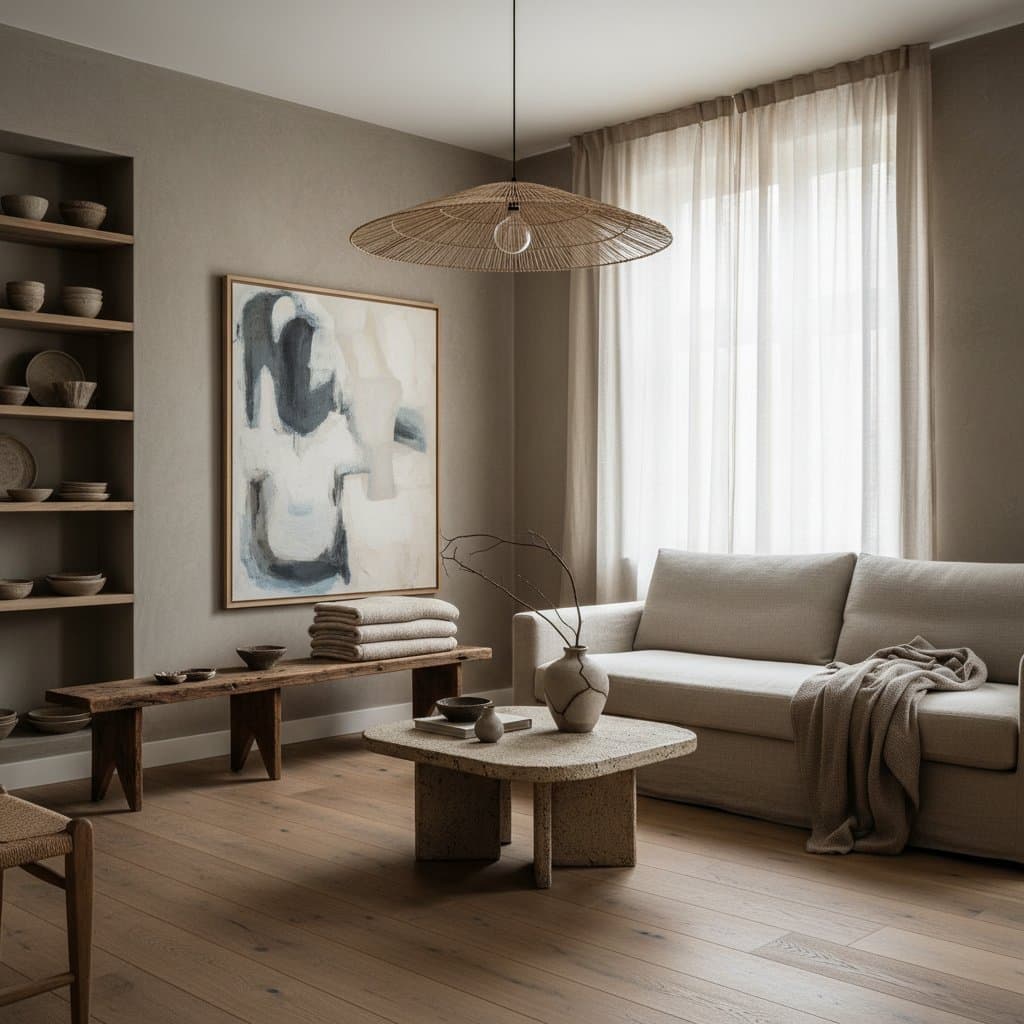
Why Wabi-Sabi's Imperfect Charm Leads 2026 Interior Trends
Imagine entering a room that instantly soothes the mind. Soft light filters across textured plaster walls, a hand-thrown vase rests slightly off-center on a weathered oak table, and linen curtains sway gently in the breeze. Elements do not match precisely, yet the arrangement conveys deep intention. This essence captures Wabi-Sabi, a Japanese design philosophy that honors imperfection, impermanence, and authenticity.
Interior design trends increasingly favor natural materials and genuine craftsmanship. Wabi-Sabi provides a compelling alternative to the sleek perfection that has long prevailed. Homeowners require neither a strict minimalist style nor an extensive budget to incorporate it. An openness to the allure of items that mature gracefully and reveal narratives through their imperfections suffices.
Understanding the Wabi-Sabi Aesthetic
Wabi-Sabi originates in Japanese traditions, emphasizing simplicity, nature, and materials shaped by time. It appreciates the personality emerging from exposure, mending, and daily handling. Consider a ceramic mug bearing a subtle crack, restored via kintsugi with gold lacquer that accentuates rather than conceals the fracture. This approach acknowledges the transient nature of all things and finds subtle grace in that acceptance.
In interior settings, Wabi-Sabi manifests in subdued palettes, fluid shapes, and touchable textures. Walls receive limewash rather than uniform paint, wood remains unfinished instead of varnished, and fabrics feature inherent variations. These choices foster tranquility and stability, blending contemporary appeal with enduring quality.
Why Wabi-Sabi Resonates in Today's World
Digital saturation in daily life heightens the desire for tangible environments. Mass-manufactured furnishings and impeccable surfaces often appear impersonal. Wabi-Sabi restores warmth and human touch. It encourages pausing to feel the wood's grain or observe how sunlight alters a room's hues.
This philosophy aligns with contemporary sustainability priorities. Rather than discarding worn objects, it promotes restoration, repurposing, and valuing developed patina. It supports environmentally aware practices through locally sourced items, artisan creations, and lasting designs that outpace fleeting fashions.
Incorporating Wabi-Sabi into Your Home
Full renovations prove unnecessary to adopt this style. Begin modestly, prioritizing genuineness over refinement. The following strategies offer practical entry points for integrating Wabi-Sabi elements.
1. Select Authentic Materials
Natural surfaces form a strong base.
- Wood: Choose oak, cedar, or walnut displaying clear grain patterns. Apply oils or waxes instead of glossy sealants to allow natural breathing.
- Stone: Incorporate rough-hewn slate, matte marble slabs, or smooth river stones for varied tactile experiences.
- Textiles: Select linen, wool, hemp, or cotton for their inherent softness. Prioritize hand-loomed or plant-based dyed variants to enhance visual interest.
Such selections develop appealing patina with age, recording life's passages.
2. Welcome Imperfections
Wabi-Sabi flourishes amid asymmetry. Visible brush marks on wall treatments or mismatched pottery sets exemplify this. A dining table marked by family gatherings or a rug softened by foot traffic holds greater appeal than pristine alternatives.
Intentionally accentuate irregularities for effect. Repair a notched bowl with clear resin that remains evident, or restore a vintage chair's upholstery with a noticeable patch. These features spark dialogue and elevate ordinary items.
3. Streamline the Environment
Wabi-Sabi spaces avoid clutter without descending into austerity. They harmonize openness with purposeful possessions. Remove excess from surfaces, retaining only items that evoke ease or recollection. A stack of cherished books, a subtly fragranced candle, or a crafted bowl personalizes without dominating.
Facilitate circulation of air and illumination. Spacing objects thoughtfully amplifies their significance.
4. Integrate Light and Shadow
Gentle, scattered lighting amplifies Wabi-Sabi serenity. Steer clear of stark ceiling lights. Employ table lamps with fabric shades, flickering candles, or sconces that produce cozy glows. Filter daylight via sheer curtains or bamboo dividers to yield smooth daily shifts.
5. Prioritize Artisan Work
Wabi-Sabi respects the creator's mark. Source furnishings, pottery, or fabrics from regional makers. Their minor variances confer uniqueness. Favor durable singles over abundant factory outputs. One artisan table conveys deeper significance than a matching suite.
Engaging the Senses in Design
Wabi-Sabi extends beyond sight to encompass full sensory involvement. Woven textures invite touch, cedar aromas linger subtly, and floorboards offer faint creaks under step. These layers cultivate profound relaxation.
Evaluate material responses to interaction. A clay vessel warms in hold, linen cushions yield with use, wool blankets acquire depth through laundering. Such nuances anchor presence, embodying Wabi-Sabi's core.
Key Practical Aspects
Strategic planning precedes any home updates.
Budgeting: Luxury proves optional for Wabi-Sabi allure. Salvaged timber, antique acquisitions, and market-sourced crafts typically prove economical while delivering superior genuineness compared to recent purchases.
Timeline: Patina emerges gradually, so permit designs to mature organically. Wabi-Sabi realms gain depth progressively rather than achieving completion at once.
Upkeep: Organic elements demand light tending. Reapply oils to bare wood periodically, and permit linen to crease naturally for authentic charm. Embracing these traits enhances the style.
Regulations and Security: For significant modifications like wall adjustments or surface applications, consult local building codes. Engage specialists versed in organic substances to ensure proper installation and stability.
Contemporary Interpretations of Wabi-Sabi
Modern practitioners adapt Wabi-Sabi to current contexts. City dwellings might combine concrete bases with plush fabrics and a lone branch sculpture. Expansive residences fuse it with Nordic restraint or agrarian rusticity, uniting spareness and coziness.
Adaptability suits diverse locales. Seaside abodes incorporate driftwood accents and pale linens, while metropolitan lofts highlight tonal neutrals and softened metals via crafted pottery. The fundamental spirit persists: sincere, soothing, individualized.
Experiencing Wabi-Sabi Daily
Adopting this viewpoint transforms spatial perception. One begins to value nuances, such as dawn rays on a fractured vessel or a table's edges rounding through seasons.
This lens redirects focus from flawlessness to mindfulness. Sustaining existing elements fosters conservation and appreciation, diminishing excess while building contentment.
Steps to Implement Your Vision
To initiate a Wabi-Sabi infusion, identify personal interpretations of imperfection. Perhaps it resides in a seasoned dining surface's glow or a serene, monochromatic sleeping area. Introduce aligned materials and artifacts accordingly.
For ambitious endeavors, collaborate with experts in organic elements and heritage techniques. Platforms like doricsouth.com enable connections with qualified professionals aligned to your goals. They advise on coatings, illumination, and finishes to realize your concept.
This method unfolds dynamically. Spaces emerge not merely tranquil but inhabited, rich with narrative and recollection. As textures mellow and weaves relax, environments narrate personal journeys, flawed yet true.
Wabi-Sabi transcends trends to embrace life's uneven cadence. Designing thus elevates homes beyond shelter to mirrors of growth and essence.