
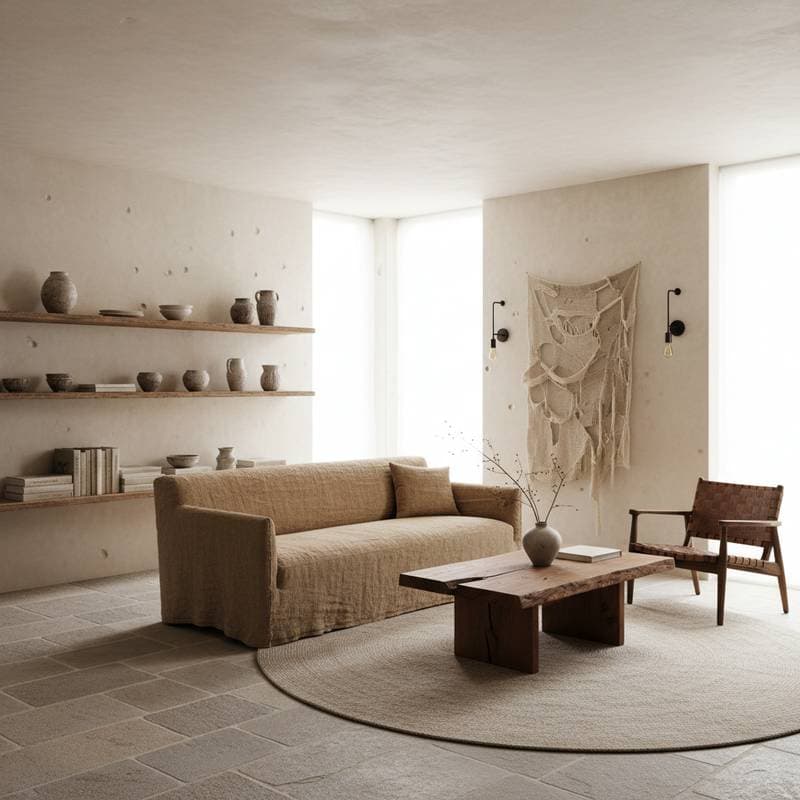
Imperfect Beauty Trends Shaping 2026 Interiors
Imagine entering a room where surfaces reveal history through their textures. A hand-thrown ceramic vase rests slightly off-center on a raw wood shelf, its glaze showing natural variations. Walls display subtle texture that avoids the sterility of flawless surfaces. Homeowners increasingly seek this authenticity. The shift toward imperfect beauty emphasizes balance, texture, and honest materials rather than reduced polish.
Why Imperfection Resonates
Interior design has emphasized sleek finishes and precise lines for years. After pursuing perfection, many find that imperfection connects more directly to human experience. Details such as the hand that formed a clay bowl, uneven grain in oak, or developing patina on brass fixtures convey warmth and presence.
This appreciation draws from wabi-sabi principles that value simplicity, transience, and unrefined qualities. Modern applications soften minimalism with organic shapes and handmade objects. The resulting spaces remain calm without feeling cold and natural without losing intent.
Core Principles of Wabi-Sabi Design
Wabi-sabi rests on three foundations that guide current interiors.
- Simplicity focuses on essentials where each element serves a clear purpose and supports overall harmony.
- Natural materials such as wood, linen, stone, and clay introduce variation that keeps rooms dynamic.
- Graceful aging treats wear as an asset, allowing weathered surfaces to add depth and memory.
Together these elements produce honest rooms that support restoration.
Current Expressions of Imperfect Beauty
The approach appears in several practical directions.
- Textured walls replace smooth drywall with limewash or clay plasters that shift tone with changing light and require minimal upkeep.
- Handcrafted furniture and ceramics from local makers introduce unique edges and forms that mass-produced items lack.
- Stone and wood retain natural marks such as marble veins or wood knots instead of concealing them.
- Soft minimalism balances open areas with rounded shapes, muted earth tones, and layered textiles.
- Patina develops on brass, leather, and wood through regular use, creating emotional continuity over time.
Steps to Apply the Approach
Begin with targeted changes rather than full renovations.
- Declutter intentionally by retaining only items that serve function or provide genuine satisfaction.
- Layer natural textures through linen, wool, and unfinished wood to create tactile contrast.
- Allow asymmetry so objects sit off-center in keeping with lived experience.
- Select handcrafted items from small studios to capture visible human marks.
- Permit natural wear on floors and textiles that signal ongoing use.
Budget and Maintenance Factors
The aesthetic accommodates various budgets through resourceful choices such as refinishing existing pieces or combining secondhand and new items. Reclaimed materials frequently cost less than new factory products while providing greater visual interest.
Textured and matte surfaces conceal marks better than glossy ones. In moisture-prone areas, apply sealers to plasters and protective coatings to porous materials. Structural changes require consultation with licensed professionals to maintain safety standards.
Daily Experience of the Aesthetic
Living with these choices encourages attention to ordinary moments such as light moving across a wall or the feel of a handmade object. The result supports a measured pace within the home.
Sustaining the Design Over Time
The trend reflects lasting priorities around meaning, resource use, and personal connection. Interiors developed this way age alongside their occupants, with each mark contributing to an evolving story.