
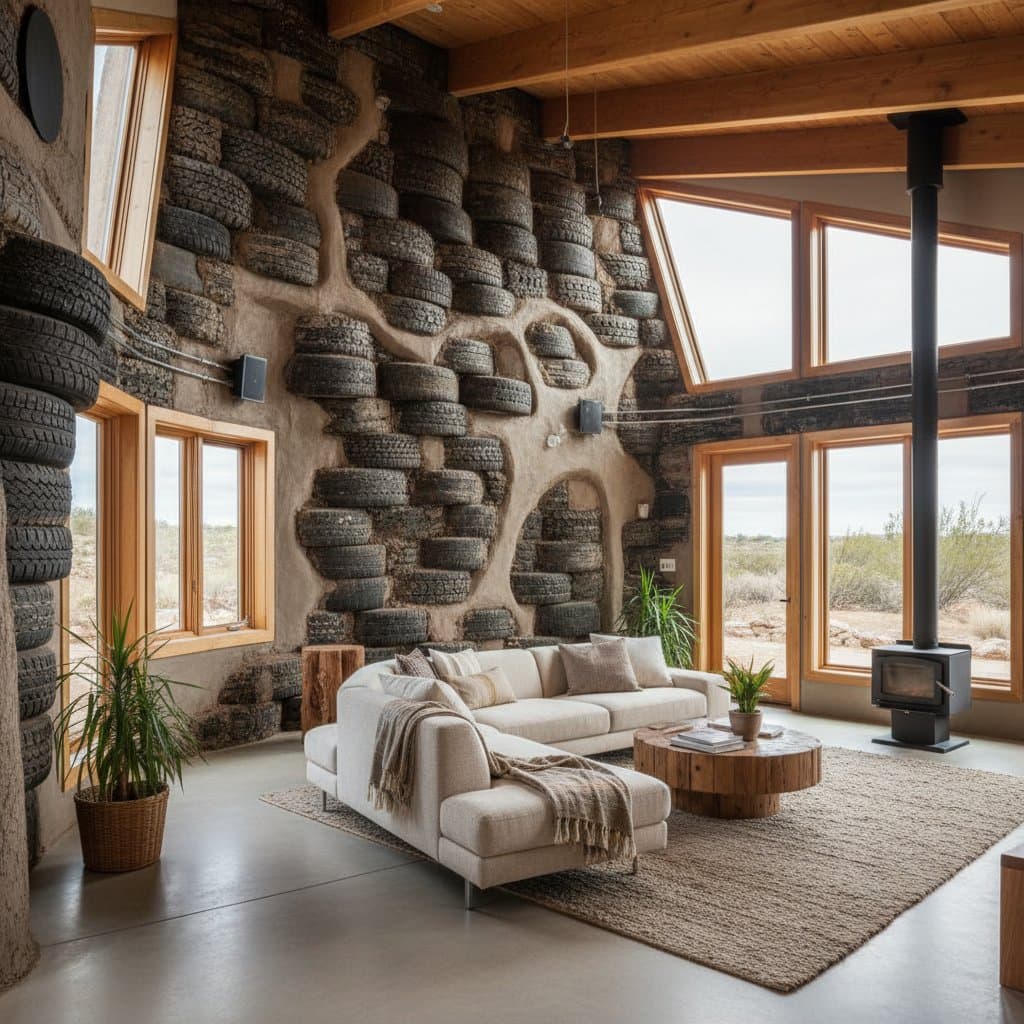
Recycled Tire Walls in Earthship Designs
Builders increasingly repurpose discarded tires to form durable walls in earthship homes. This technique converts waste rubber into structural components that deliver thermal mass and support sustainable construction. The resulting structures reduce landfill contributions while enabling off-grid living with lower energy demands.
Advantages of Tire Wall Construction
This building approach provides clear environmental and financial returns. Tires filled with compacted soil create dense units that absorb daytime heat and release it slowly after dark. Indoor temperatures therefore remain stable with reduced reliance on mechanical heating or cooling systems.
The method also keeps tires out of landfills. Each completed wall incorporates many units that would otherwise become long-term pollution sources. Builders often obtain used tires at no cost from local retailers, which keeps material expenses far below those of conventional foundations and framing.
Function Within Earthship Homes
Earthship designs prioritize independence from utility grids through combined passive systems. Tire walls act as both primary structural supports and temperature regulators. Sunlight strikes the walls during the day and warms the packed earth inside each tire. Heat then radiates inward at night to maintain comfortable conditions without additional energy input.
These walls integrate with solar arrays, rainwater collection, and natural ventilation channels. The combination produces a self-contained living environment that operates year-round with minimal external resources.
Step-by-Step Tire Wall Assembly
Follow this sequence to construct a stable tire wall.
-
Gather used tires, a compacted gravel or soil base, and fill material such as dirt or sand. Local tire dealers commonly supply tires without charge.
-
Place the first row of tires on a level foundation. Pack each tire firmly with soil using a tamper or sledgehammer until the unit feels rigid and heavy.
-
Offset the next row in a staggered pattern like traditional brickwork. This arrangement increases lateral strength and prevents vertical seams.
-
Fill spaces between tires with smaller stones or packed soil to create a continuous surface.
-
Apply plaster, stucco, or adobe once the wall reaches full height. The finish protects the tires from moisture and ultraviolet exposure while providing a finished appearance.
Manual construction requires several hours per row. The process remains affordable because material costs stay low, yet it demands consistent physical effort and attention to leveling.
Benefits and Limitations
Benefits:
- Diverts substantial volumes of waste from landfills while producing functional building elements
- Supplies high thermal mass that stabilizes indoor temperatures across seasons
- Reduces long-term energy expenses through passive climate control
- Needs minimal maintenance after the protective finish is applied
Limitations:
- Requires intensive labor during the packing and stacking phases
- Encounters permitting restrictions in some building jurisdictions
- Demands careful site drainage to prevent moisture accumulation inside the tires
Starting a Tire Wall Project
Test the technique first on a small garden wall or storage shed to develop proper packing and leveling skills. Verify local building codes before beginning any habitable structure. Experienced earthship builders can offer guidance on moisture barriers and finish materials. This approach enables the creation of resilient, low-impact homes that function in harmony with natural temperature cycles and resource conservation goals.