
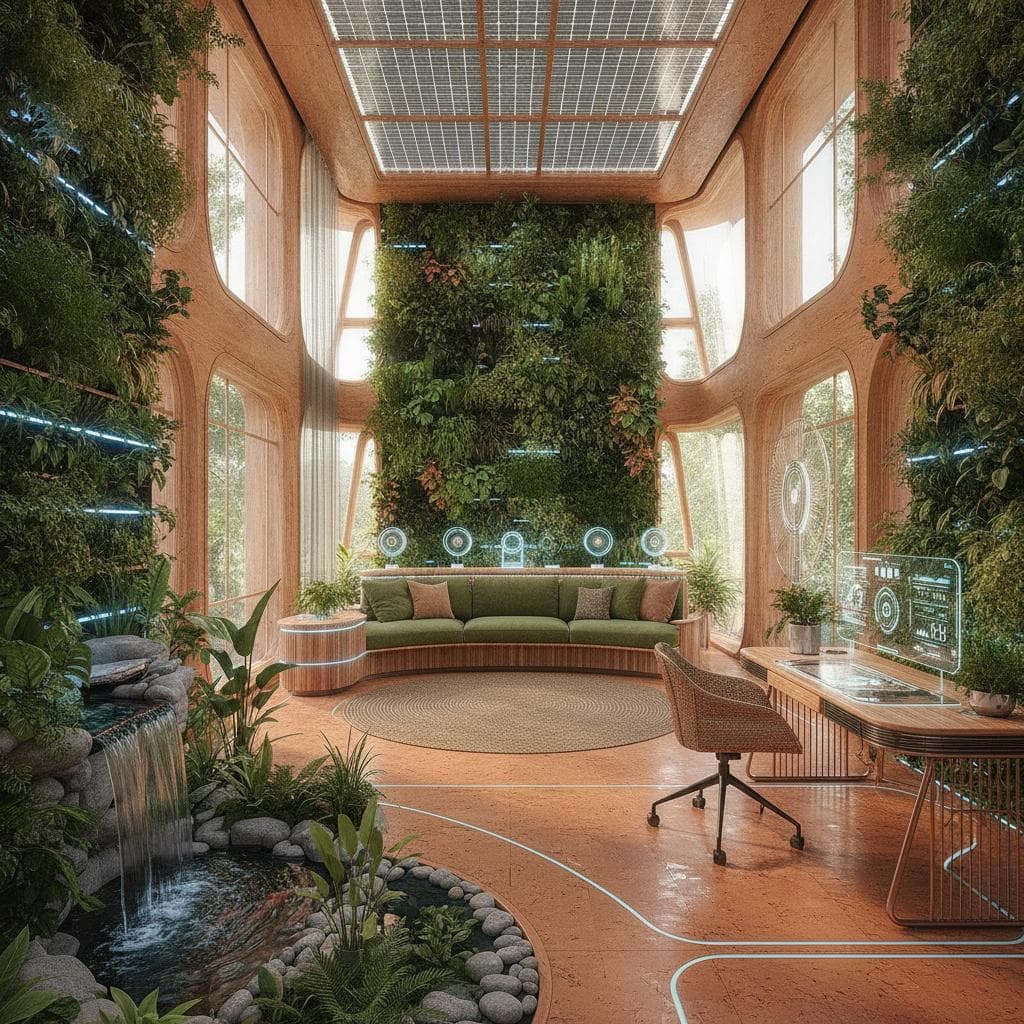
Solarpunk Homes: Optimistic Eco-Futurism in Design
Imagine waking up in a home filled with natural light and surrounded by greenery that cleans the air. The roof produces power while walls regulate temperature and the water system recycles itself. This approach to living exists today through the solarpunk movement, where architecture, technology, and nature operate together.
People who value comfort, sustainability, and hopeful design find solarpunk homes relevant. These residences extend beyond solar panels and recycled materials to represent a complete perspective on environmental coexistence.
Core Elements of Solarpunk Design
Solarpunk design merges natural and built environments for mutual benefit. Homes achieve energy efficiency through local adaptation and community focus while technology serves human needs without dominating nature.
Common features include solar energy systems with battery storage, green roofs and walls for natural insulation, and rainwater collection paired with greywater recycling. Passive design uses strategic window placement and ventilation for temperature control. Natural materials such as bamboo and reclaimed steel appear frequently alongside community gardens that support local food production.
Each home adapts these elements to its specific climate, culture, and resources rather than following a rigid template.
Distinctive Qualities of the Solarpunk Approach
Solarpunk design emphasizes renewal and visual appeal over mere harm reduction. It encourages creation of spaces that foster optimism about future possibilities instead of focusing solely on resource limits.
This positive framing helps sustainability feel personal and sustainable long term. Homeowners often invest more readily in features like solar panels when they form part of an inspiring vision.
Practical Steps to Develop a Solarpunk Home
Existing homes can incorporate solarpunk principles through targeted changes. Begin with energy independence by installing solar panels, which typically range from eight thousand to fifteen thousand dollars depending on location and scale. Smaller initial setups can power lighting or water heating before expansion.
Battery storage adds resilience by maintaining power during outages. Next, integrate greenery through green roofs, living walls, or simpler vertical planters and indoor vines that improve cooling and air quality.
Reclaim materials from local salvage sources to reduce costs and add character. Reclaimed wood and salvaged bricks work well for both structural and decorative purposes. Passive design techniques further enhance comfort by positioning windows for optimal daylight, adding shade structures, and selecting reflective roof colors.
Water management involves rain barrels for garden use and greywater systems that redirect sink and shower water to toilets. Low-flow fixtures provide an accessible starting point. Community connections through shared gardens or tool libraries distribute costs and knowledge effectively.
Advantages and Trade-offs
Solarpunk homes deliver lower long-term utility costs, improved indoor air quality, and stronger community ties. They also create calm environments connected to natural surroundings.
Initial expenses for systems and materials run higher, and green features require regular maintenance. Product availability varies by region, and custom designs extend planning periods. Many owners proceed in phases to manage these factors.
Real-World Applications
Architects combine organic forms with efficient systems in curved roofs that capture rainwater and facades covered in vegetation. Interior spaces feature open layouts with natural materials like wood and clay while smart controls operate discreetly in the background.
Urban examples include apartment buildings with rooftop farms and shared solar arrays. Rural projects often use locally sourced materials that integrate with surrounding landscapes.
Key Planning Factors
Review local permit requirements for solar installations and water systems before starting. Account for ongoing maintenance of plants and equipment in budgets and schedules. Professional input from designers helps align choices with climate conditions and avoids unnecessary expenses.
Daily Integration of Solarpunk Principles
Simple habits such as selecting energy-efficient appliances and natural textiles extend the approach without construction. Warm LED lighting and plant-based paints reinforce a grounded atmosphere.
Residents often notice increased awareness of energy patterns and local ecosystems through these routines. The home serves as a foundation for broader involvement in sustainable community efforts.