
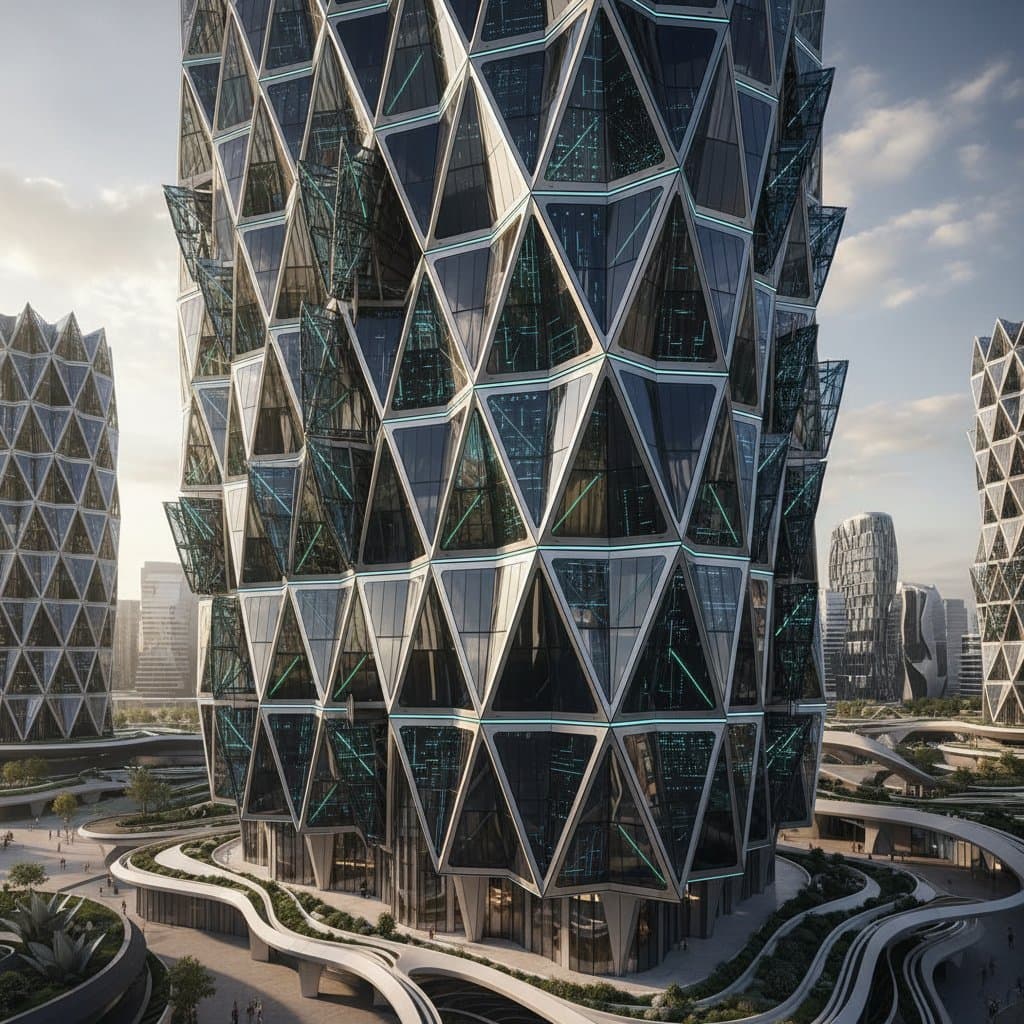
Algorithms Driving Next-Generation Building Facades
Imagine passing an office tower where exterior panels subtly shift with the day's light. Morning sun casts a different glow than afternoon rays, and at night, the surface emits a calculated luminescence. This phenomenon represents more than stylistic choice; it demonstrates algorithms orchestrating environmental adaptation in real time.
Architects and builders employ algorithms to craft facades that blend beauty with intelligence. These systems learn from data, adjust configurations, and optimize operations autonomously. They form the core of computational and parametric design, where software and analytics direct construction beyond previous limitations.
The Transition to Computational Architecture
Traditional facades remain fixed after installation, offering visual appeal but no adaptability. Computational facades, however, respond dynamically to factors such as solar angles, temperatures, and wind patterns. Algorithms analyze environmental inputs and convert them into structural adjustments or optical modifications.
Parametric design underpins this evolution. Designers input variables into digital models, allowing automatic updates across the entire structure. For instance, rules might dictate that window panels rotate to mitigate glare during peak sunlight or seal to preserve warmth in cooler conditions. This approach applies logical programming to architectural elements.
The Importance of Algorithms in Facade Development
Algorithms enable exploration of intricate interactions among form, function, and surroundings. They handle vast datasets that exceed manual computation. Far from diminishing creativity, this technology amplifies it, as architects establish parameters while algorithms implement variations.
Key advantages fuel widespread adoption:
- Energy efficiency: Facades modulate shading and airflow to reduce demands on heating and cooling systems.
- **Material ** Algorithms evaluate numerous configurations to maximize the performance of glass, metal, or composites.
- Aesthetic versatility: Creators test intricate forms and motifs unattainable through manual sketching.
- Environmental adaptability: Structures react to weather shifts, enhancing occupant comfort and material durability.
Practical Implementation of Adaptive Facades
Development begins with digital modeling in tools like Rhino paired with Grasshopper or Autodesk Dynamo. These platforms link geometric forms to mathematical parameters. Inputs such as solar irradiance or wind vectors integrate into the model, prompting algorithms to produce responsive patterns or motions.
Consider a facade in an arid climate featuring triangular metal panels. Each panel adjusts its tilt based on solar positioning. The algorithm computes optimal angles for all panels daily, blocking harsh rays while permitting diffused light. This creates a facade that appears animated, guided entirely by analytics.
Bridging Digital Designs to On-Site Construction
Converting models to physical components demands exactitude. Techniques including CNC machining and robotic assembly adhere to digital blueprints, achieving precision to the millimeter.
Contractors collaborate intimately with designers. Components arrive uniquely shaped, tagged, and coded for assembly. Effective projects hinge on seamless dialogue among modelers, engineers, and installers. Post-installation, embedded sensors and controllers activate the facade's capabilities.
Ideal Applications for Dynamic Facades
Responsive exteriors suit specific project needs rather than universal use. They excel in these scenarios:
- Intense solar environments: Tall buildings or public structures in bright regions gain from automated shading.
- Expansive glazing: Adaptive elements like adjustable louvers or electrochromic glass control daylight and thermal loads.
- Signature architecture: Iconic developments leverage kinetic or algorithmic patterns for unique presence.
- Sustainability-focused builds: Projects targeting green certifications employ these methods to achieve efficiency benchmarks.
Balancing Costs and Technical Demands
Computational facades raise initial expenses by 10 to 30 percent over conventional curtain walls. Factors include extended design phases, modeling efforts, bespoke manufacturing, and automation infrastructure. Long-term gains in operations frequently recoup investments, with energy reductions up to 25 percent in varied climates and structures.
Upkeep varies by design. Fixed parametric surfaces, shaped by algorithms but immobile, demand little attention. Moving kinetic systems necessitate regular checks and alignments. Owners plan for firmware refreshes, sensor maintenance, and mechanical tune-ups.
Navigating Regional and Code Influences
Climate dictates material and feature choices. Coastal or humid areas require anti-corrosion treatments. Cold zones prioritize thermal barriers and moisture management. Regulations might restrict dynamic elements or mandate failover mechanisms during outages.
Approval processes extend due to scrutiny of safety and programming. Engage authorities and specialists early to streamline reviews. Progressive municipalities incentivize such innovations through efficiency incentives, easing compliance.
Ensuring Safety and Dependability
Dynamic parts pose hazards without rigorous engineering. Rotating or shifting panels need robust fixings, constrained travel, and wind-triggered halts. Systems incorporate manual controls for servicing and crises.
Wiring and interfaces withstand elements and remain serviceable. Backup sensors minimize downtime. Select proven vendors and conduct thorough testing prior to use.
Contractor Perspectives on Algorithmic Projects
Contractors adapt workflows to data-centric builds, replacing flat plans with parametric files. Partnerships with fabrication experts prove vital. Firms invest in training for model interpretation and site-software alignment.
Installation emphasizes accuracy, followed by system verification. Tasks extend to cabling, programming, and protocol adherence. Proficiency in these areas positions contractors for premium assignments.
Static Versus Dynamic Facade Strategies
Static parametric facades apply algorithms solely in the design phase. Resulting fixed forms, such as sun-optimized perforations, offer reliability with low intervention.
Dynamic facades incorporate ongoing adjustments via sensors and actuators. They achieve superior outcomes but demand vigilant oversight. Selection hinges on fiscal limits, support resources, and objectives.
Essential Software for Computational Work
Teams utilize proven platforms:
- Grasshopper for Rhino: Visual scripting ties shapes to variables.
- Autodesk Dynamo: Links parametric elements to Revit-based information models.
- Ladybug and Honeybee: Assess environmental impacts like solar gain and comfort.
- Python or C# scripting: Enables tailored automation and integrations.
Mastery of these fosters team cohesion across phases.
Emerging Trends in Facade Innovation
Autonomy advances with machine learning, forecasting patterns for preemptive tuning. New materials emerge, including opacity-shifting glass sans mechanics and humidity-sensitive bio-surfaces in testing.
Seamless ties to broader building controls optimize holistic performance. Facades will synchronize with climate systems for unified efficiency, prioritizing user well-being alongside savings.
Steps to Integrate Adaptive Facades
Clarify objectives for your build or upgrade, whether efficiency, appeal, or usability. Assess fit through studies of local weather, site layout, and finances.
Partner with computational-savvy architects for simulations demonstrating outcomes. Engage skilled contractors to translate virtual plans into durable installations. These facades merge analytics, ingenuity, and execution to yield tangible benefits and standout presence.