
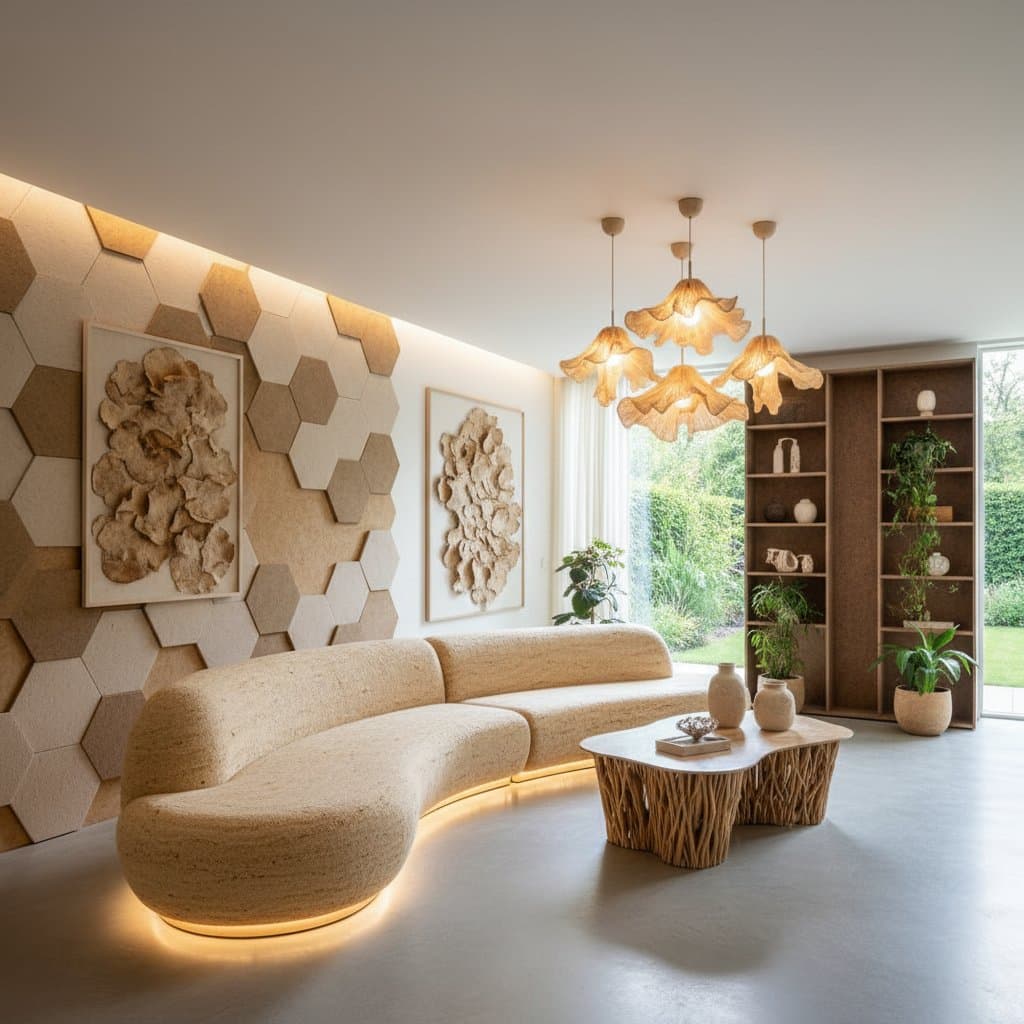
Mycelium Materials Redefine Sustainable Interiors
Interest in natural, sustainable materials has surged within interior design circles. While wood, bamboo, and reclaimed stone receive much attention, an unexpected material emerges as a transformative force. This material grows rapidly, decomposes naturally, and exhibits remarkable strength. Mushroom mycelium leads this quiet revolution in sustainable design.
For those seeking eco-friendly building options or aiming to minimize renovation impacts, mycelium-based products warrant close consideration. These materials transcend fleeting trends. They herald a profound evolution toward renewable, low-impact approaches in design.
Understanding Mycelium and Its Significance
Mycelium forms the root-like network of fungi. It thrives by consuming agricultural waste, such as corn husks or sawdust, to develop a dense, foam-like structure. When cultivated within molds, mycelium adopts diverse shapes, including wall panels or furniture elements. Upon achieving the target form, heat treatment halts growth and yields a stable, resilient product.
Mycelium's allure stems from its inherent strength and ecological profile. These materials fully biodegrade, remain non-toxic, and demand minimal energy for production. In contrast to foam or plastic alternatives, they emit no harmful chemicals during creation or breakdown. Homeowners thereby gain a viable substitute for synthetic elements in living environments.
Applications of Mycelium in Indoor Spaces
Design professionals increasingly incorporate mycelium into innovative applications. Common uses include:
- Acoustic wall panels that dampen noise and manage humidity levels
- Insulation boards suitable for interior walls or ceilings
- Lampshades and light fixtures that diffuse light with organic warmth
- Furniture pieces like stools, side tables, and ornamental panels
- Packaging solutions for eco-conscious shipping and storage
Homeowners often begin with decorative features. Mycelium-based lighting or wall accents become accessible through specialty suppliers or eco-design ateliers. As production expands, applications will extend to load-bearing elements.
The Production Process for Mycelium Materials
Grasping the creation method underscores the sustainability of these materials. The following outlines the key stages in simplified terms.
- Substrate preparation: Agricultural residues, including hemp shives or sawdust, undergo cleaning and sterilization.
- Inoculation: Mycelium spores integrate with the prepared substrate.
- Growth phase: The blend fills molds in a controlled, humid, warm setting over several days.
- Drying and heat treatment: Attaining optimal density triggers drying and heating to arrest growth and eliminate excess moisture.
- Finishing: Sanding, coating, or sealing completes the piece based on its purpose.
This sequence relies on biological mechanisms rather than harsh chemicals. The outcome delivers a lightweight, enduring material with refined aesthetics.
Pricing and Accessibility
Mycelium products currently classify as premium offerings. Expect costs of $8 to $15 per square foot for decorative panels, varying by thickness and surface treatment. Bespoke furniture ranges from $300 to $1,000, aligned with artisanal wood or stone equivalents.
Economies of scale promise future price reductions as manufacturers proliferate. Presently, mycelium suits accents or targeted installations over comprehensive projects. Numerous homeowners deem the ecological gains justify the investment.
Safety Features and Longevity
Mycelium inherently resists fire and avoids toxic emissions under heat exposure. Post-treatment, it wards off mold, ensuring suitability for enclosed spaces. Its lifespan mirrors that of medium-density fiberboard or cork.
In structural contexts, mycelium does not yet rival wood or metal. It excels in ornamental or thermal roles. For panels or insulation, verify alignment with local codes, which may necessitate bio-material certifications or fire-rated assessments.
Ecological Benefits
Mycelium surpasses traditional materials in several environmental metrics:
- Reduced carbon emissions: Manufacturing produces far fewer greenhouse gases than foam or plastic processes.
- Zero-waste sourcing: It utilizes byproducts from agriculture that face disposal otherwise.
- Full biodegradability: End-of-life decomposition occurs without toxic remnants.
- Minimal energy input: Cultivation needs only controlled humidity and temperature.
Such attributes position mycelium as an ideal choice for eco-interior initiatives. It aligns seamlessly with circular principles, enabling materials to reintegrate into natural cycles.
Incorporating Mycelium into Residential Design
To explore mycelium, initiate with modest implementations. Consider these strategies:
- Accent lighting: Swap a pendant or table lamp shade for a mycelium variant.
- Wall enhancements: Add sculpted panels that serve as sound absorbers.
- Furniture selections: Opt for mycelium-composite stools or side tables.
- Insulation updates: During renovations, apply boards to isolated wall or ceiling areas.
Collaborate with biomaterials-savvy designers or contractors. They assist in procuring verified items and ensuring harmony with current decor.
Advancing Sustainable Choices
Adopting mycelium transcends novelty. It embodies deliberate decisions that harmonize style, utility, and planetary care. This material imparts an authentic warmth absent in synthetics. Moreover, it embodies design's trajectory: partnering with natural systems.
Widespread adoption may elevate mycelium to parity with wood, cork, or recycled options. Currently, it invites hands-on engagement with green interiors. From a single fixture to expansive panels, such steps contribute to a paradigm that honors nature's efficiency in growth, resource use, and renewal.