
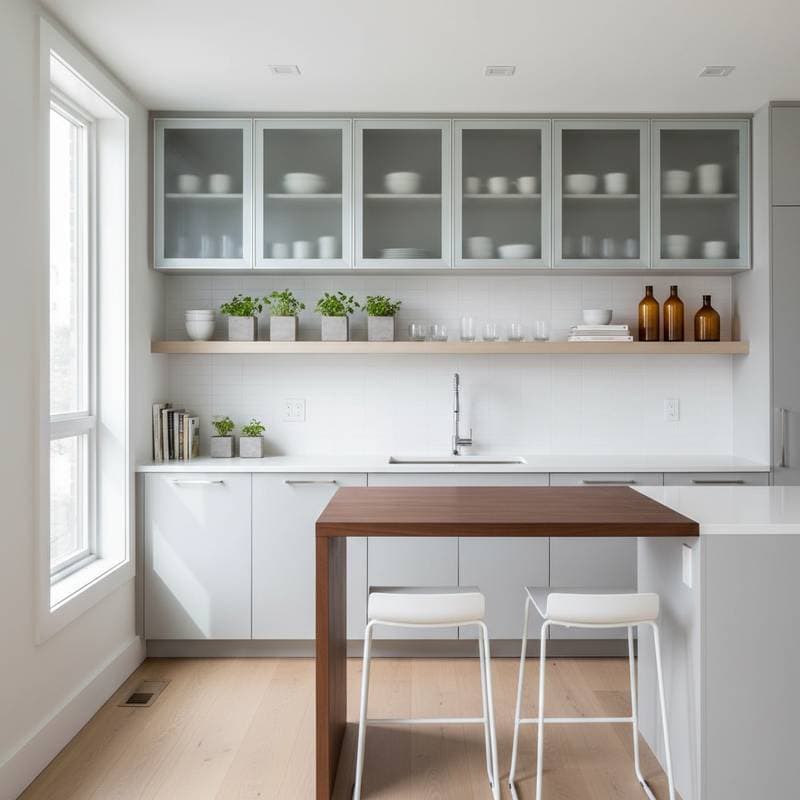
Transparent Kitchens Are In: Glass and Open Shelving Ideas
Transparent kitchens continue to gain attention because they reduce visual barriers and allow light to move through the space. Glass cabinets and open shelving replace solid doors with materials that reveal stored items while keeping the room feeling open. This approach works especially well in compact layouts where every visual cue affects perceived size.
Benefits of Glass and Open Storage
Glass surfaces reflect light from windows and fixtures, which brightens corners that once appeared dark. Open shelves display favorite dishes and glassware, turning storage into a personal statement rather than hidden clutter. The result is a kitchen that feels connected to adjacent living areas without adding physical walls.
Homeowners notice that daily routines become simpler when frequently used items remain visible and within reach. Light passes through clear panels, making the room appear larger even when square footage stays the same. These qualities explain why many designers recommend the style for both new builds and remodels.
Choosing the Right Glass Style
Clear glass maximizes brightness and suits households that maintain orderly shelves. Frosted panels provide privacy while still transmitting soft light, which helps conceal small amounts of dust or mismatched containers. Ribbed glass adds subtle texture that pairs well with both traditional and contemporary cabinet frames.
Placement matters as much as the glass type. Install glass fronts on upper cabinets first, then consider pantry doors or island ends for visual consistency. Mixing one or two glass sections with solid doors keeps costs manageable while preserving the open effect.
Organizing Open Shelves for Daily Use
Place everyday plates, bowls, and mugs on lower shelves so they remain easy to grab during meal preparation. Alternate stacks of dishes with small plants or cookbooks to create rhythm without overcrowding. Choose wood shelves for warmth or metal brackets for a cleaner industrial line that matches existing hardware.
Dust settles on open surfaces, so establish a simple weekly routine of wiping shelves with a microfiber cloth. Store less attractive items such as bulk packaging inside closed lower cabinets to maintain a tidy appearance. This balance keeps the display functional rather than purely decorative.
Planning for Safety and Budget
Select tempered safety glass near cooktops and in homes with children to reduce breakage risks. Combine display areas with closed storage so cleaning supplies and small appliances stay out of sight. Open shelving installed on existing walls often costs less than full cabinet replacement, yet still delivers the desired airy result.
Beginning the Installation Process
Test the look by replacing a single upper cabinet door with glass or adding one floating shelf near a window. Live with the change for several weeks before committing to larger alterations. When a full update is planned, consult local contractors who can confirm structural requirements and handle precise measurements.
Professional guidance ensures the final arrangement supports both storage needs and the desired sense of openness. The kitchen then functions as a bright, welcoming center of the home rather than a closed-off workspace.