
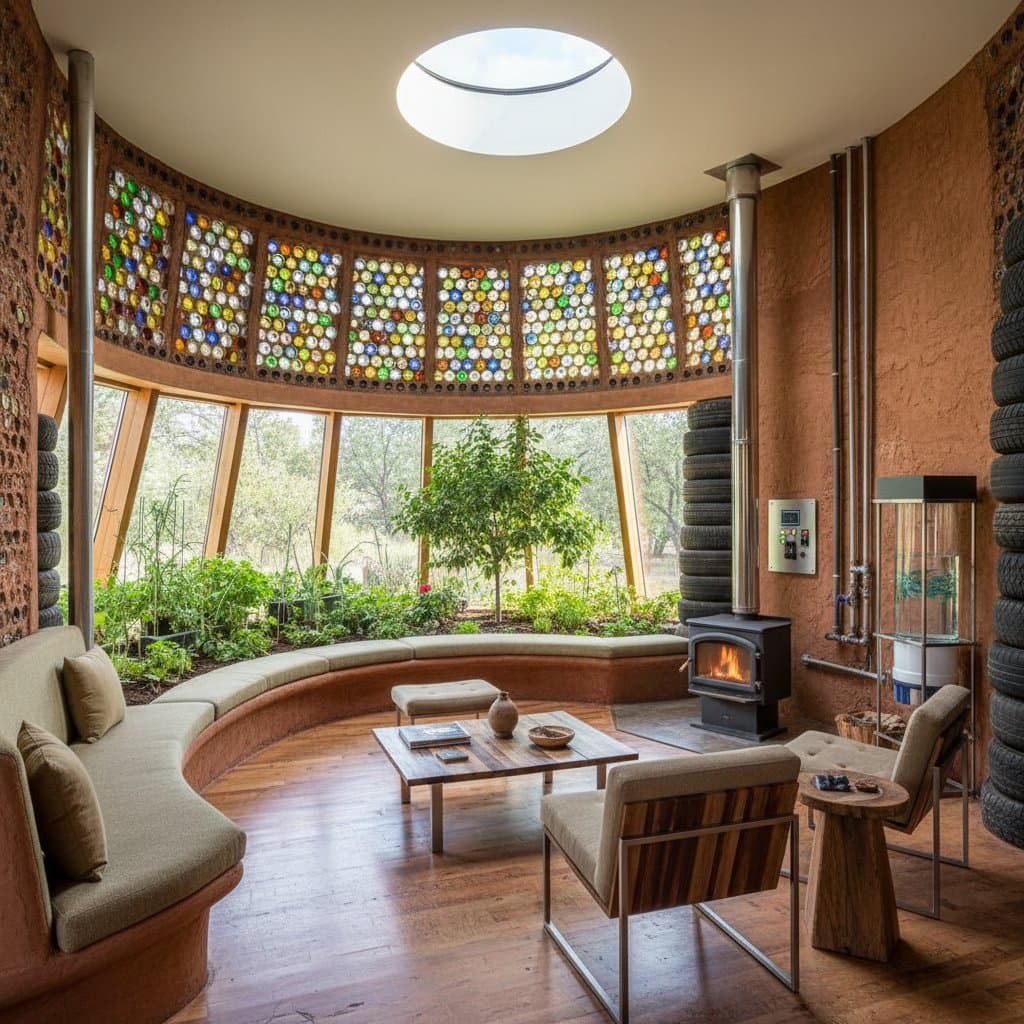
Earthships: Innovative Structures for Off-Grid Independence
Picture a residence that maintains comfortable temperatures year-round without dependence on electrical switches, municipal water supplies, or natural gas lines. All essential functions operate seamlessly within a self-contained environment. This vision captures the essence of an Earthship, an off-grid dwelling that redefines conventional residential norms.
Numerous property owners aspire to greater autonomy, yet concerns over expenses, regulatory compliance, and feasibility often deter action. Earthships address these challenges by integrating recycled components, passive solar principles, and renewable energy technologies into a cohesive, sustainable design. While not suitable for every individual, these homes transform off-grid aspirations into viable realities for committed builders.
The following sections examine Earthship mechanics, financial implications, and decision-making factors to determine alignment with personal goals.
Motivations for Choosing Earthships
Individuals frustrated by escalating utility expenses or motivated by ecological responsibility find Earthships particularly compelling. These dwellings deliver complete energy self-reliance, minimal ongoing costs, and a significantly lighter environmental burden.
Principal advantages encompass:
- Energy self-sufficiency. Photovoltaic panels, supplemented occasionally by wind turbines, fulfill all electrical demands.
- Water autonomy. Systems capture and store rainwater to support potable uses, personal hygiene, and landscape irrigation.
- Natural thermal regulation. Substantial earthen barriers stabilize indoor climates without mechanical intervention.
- Efficient waste management. On-site greywater and blackwater treatments recycle moisture for non-potable applications.
- Integrated food production. Select configurations incorporate greenhouse spaces for cultivating produce throughout the seasons.
Off-grid existence demands personal accountability for infrastructure upkeep. Residents handle solar array maintenance, water distribution oversight, and consumption monitoring. The resulting liberation justifies the required diligence and involvement.
Financial Analysis and Location-Specific Variations
Earthship construction expenses vary based on geographic setting, material sourcing, and owner-contributed labor. Professional builds typically range from $250 to $400 per square foot. Owner-built projects lower figures to $100 to $150 per square foot, although completion timelines extend accordingly.
Sourcing emphasizes affordability through reuse; discarded tires, glass containers, aluminum cans, and salvaged timber incur little to no cost. Major outlays concentrate on:
- Photovoltaic arrays and energy storage units.
- Purification equipment and underground reservoirs.
- Piping networks and wiring assemblies.
- Expert services for site preparation and framework erection.
Stringent zoning regulations or precipitation scarcity elevate budgets via compliance measures or auxiliary installations. Desert regions necessitate expanded cistern capacities, while temperate zones demand enhanced thermal barriers or additional solar capacity to counter heating needs.
Upkeep Requirements and Enduring Viability
Post-construction, Earthships demand less routine attention than traditional residences, yet proactive management remains essential. Owners track photovoltaic storage charges, service filtration units, and sustain pumping mechanisms. Earthen surfaces and coatings occasionally require repairs, particularly in moisture-rich areas.
Routine responsibilities involve:
- Monthly evaluations of battery health, with replacements scheduled every five to ten years.
- Periodic clearing of collection screens and drainage channels.
- Assessments of mass walls for water penetration risks.
- Periodic applications of protective finishes to avert surface deterioration.
With consistent care, these homes endure for generations, relying on cyclical resource utilization that minimizes external dependencies and promotes ecological harmony.
Engaging Specialists for Key Phases
Earthships attract hands-on constructors, but certain elements necessitate certified expertise to ensure safety and adherence to standards. Load-bearing assessments, circuit integrations, and sanitation setups must conform to local ordinances. Professional records prove invaluable for future transactions involving resale or financing.
Seek qualified assistance for:
- Geotechnical planning on uneven terrain.
- Linkages among solar components, storage, and conversion devices.
- Sanitary conveyance and effluent processing infrastructures.
- Membrane sealing and load analysis for roofing elements.
Steps Toward Earthship Realization
Embarking on an Earthship project requires deliberate planning and adaptability, yet yields profound autonomy upon fruition. Establish feasible projections from the outset to navigate the endeavor effectively.
Proceed methodically: Allocate funds for unforeseen challenges, obtain necessary approvals, and consult professionals as required. The finished structure functions predominantly through inherent environmental processes, embodying resilience and ingenuity.
For those prioritizing ecological harmony and personal sovereignty, an Earthship transcends mere shelter. It forms an interconnected ecosystem that nurtures well-being and ethical alignment, demonstrating the accessibility of off-grid habitation through informed execution.