
Introduction to Earthship Homes
Earthship homes represent a revolutionary approach to sustainable architecture. These structures utilize recycled materials, particularly automobile tires, to create self-sufficient dwellings that operate off the grid. Builders pack tires with earth to form massive, thermal-mass walls capable of regulating indoor temperatures without reliance on conventional heating or cooling systems.
The concept originated in the 1970s, driven by a desire for ecological harmony and energy independence. Today, Earthships have evolved from fringe experiments to viable housing options that comply with building regulations in several regions. This shift highlights their potential for widespread adoption in an era of environmental awareness.
The Evolution of Earthship Design
Michael Reynolds, an architect from Taos, New Mexico, pioneered Earthships in response to the energy crises of the 1970s. He envisioned homes that minimize environmental impact while maximizing resident comfort. Early models focused on passive solar principles, where south-facing windows capture sunlight for warmth during winter months.
Over decades, designs have incorporated advanced features such as rainwater harvesting systems and greywater recycling for irrigation. Solar panels provide electricity, and wind turbines supplement power in suitable locations. These elements ensure that homes function independently from municipal utilities.
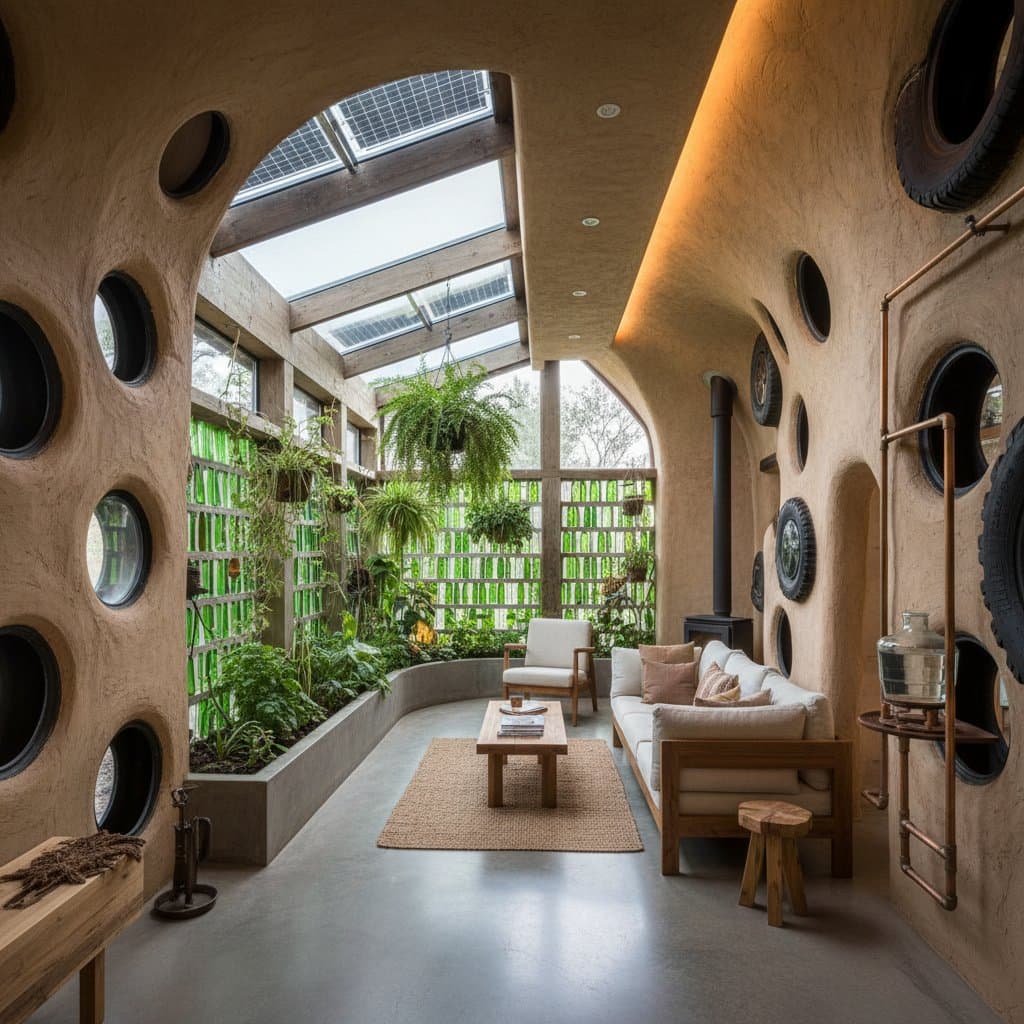
Modern Earthships blend aesthetics with functionality. Curved walls and greenhouses create inviting interiors filled with natural light. Materials like bottles and cans add colorful accents, transforming waste into artistic elements.
Core Components of an Earthship
Tire Walls: The Foundation of Strength
The hallmark of an Earthship is its tire walls. Each tire holds approximately 200 pounds of compacted earth, providing insulation and structural integrity. Construction involves pounding dirt into tires using sledgehammers, a labor-intensive process that yields walls up to two feet thick.
These walls excel in thermal mass, absorbing heat during the day and releasing it at night. In hot climates, they shield interiors from excessive warmth. Testing shows that tire walls maintain stable temperatures, often eliminating the need for air conditioning.
Off-Grid Systems for Self-Sufficiency
Water management begins with collection from roofs via gutters. Systems filter and store rainwater in cisterns, supplying potable water after treatment. Excess supports landscaping through drip irrigation.
Electricity comes from photovoltaic arrays mounted on roofs. Batteries store energy for nighttime use, with inverters converting direct current to alternating current for household appliances. In remote areas, this setup proves reliable and cost-effective over time.
Heating and cooling rely on passive design. Earth-bermed sides insulate against external temperatures, while operable vents facilitate natural airflow. South-facing greenhouses double as living spaces and food production areas.
Building an Earthship: Step-by-Step Process
Site Selection and Planning
Choose a location with southern exposure for optimal solar gain. Assess soil quality, as stable ground supports tire wall foundations. Consult local codes, as some jurisdictions now permit Earthships with modifications.
Develop blueprints using software or consult certified builders. Standard plans range from 500 to 2,000 square feet, accommodating one to four bedrooms. Factor in climate; arid regions benefit from enhanced water storage.
Construction Phases
-
Lay the foundation with concrete footings to anchor tire walls.
-
Stack and ram tires, aligning them in a running-bond pattern for stability. This phase requires a team, as each wall demands significant effort.
-
Erect the roof frame, typically hexagonal for structural efficiency. Install solar panels and plumbing during this stage.
-
Apply interior and exterior finishes, such as plaster over tires and adobe for roofs.
-
Integrate systems: Connect cisterns, wiring, and ventilation.
Completion takes three to six months, depending on crew size and weather.
Cost Analysis and Financial Considerations
Initial construction costs average $150 to $250 per square foot, comparable to custom homes but offset by long-term savings. Materials emphasize recyclables; tires cost little, though labor drives expenses.
Off-grid systems add $20,000 to $50,000, including panels and batteries. Permits and site preparation vary by location. Financing options include green mortgages or owner-builder loans.
Operational costs plummet without utility bills. Owners report annual expenses under $1,000 for maintenance and taxes. Payback occurs within 10 to 15 years through energy independence.
Adapting Earthships to Different Climates
In desert environments, like New Mexico, Earthships thrive with minimal adjustments. Enhanced insulation combats cold nights, and larger cisterns address water scarcity.
Temperate zones require roof modifications for snow loads. Northern latitudes may need auxiliary heating, though passive systems suffice in mild winters.
Tropical areas focus on ventilation to prevent humidity buildup. Elevated foundations deter flooding, and hurricane-resistant roofs use reinforced designs.
Global examples demonstrate versatility. Communities in Europe and Australia adapt plans to local materials and regulations, proving Earthships' universal appeal.
Challenges and Solutions
Critics note the physical demands of tire ramming, which can strain builders. Solutions include pneumatic tampers to ease labor.
Regulatory hurdles persist in some areas, where codes favor traditional construction. Advocacy groups work to update standards, citing Earthships' durability in earthquakes and fires.
Maintenance involves periodic battery replacement and system checks. Trained owners handle most tasks, fostering self-reliance.
Embracing Sustainable Living Through Earthships
Earthship homes offer a blueprint for resilient, eco-conscious lifestyles. They reduce carbon footprints by recycling waste and conserving resources. Residents gain freedom from utility dependencies, enhancing quality of life.
As climate concerns grow, these structures provide practical alternatives to conventional housing. Explore building one to join a movement toward planetary stewardship. The result is not just a home, but a harmonious integration with the environment.