
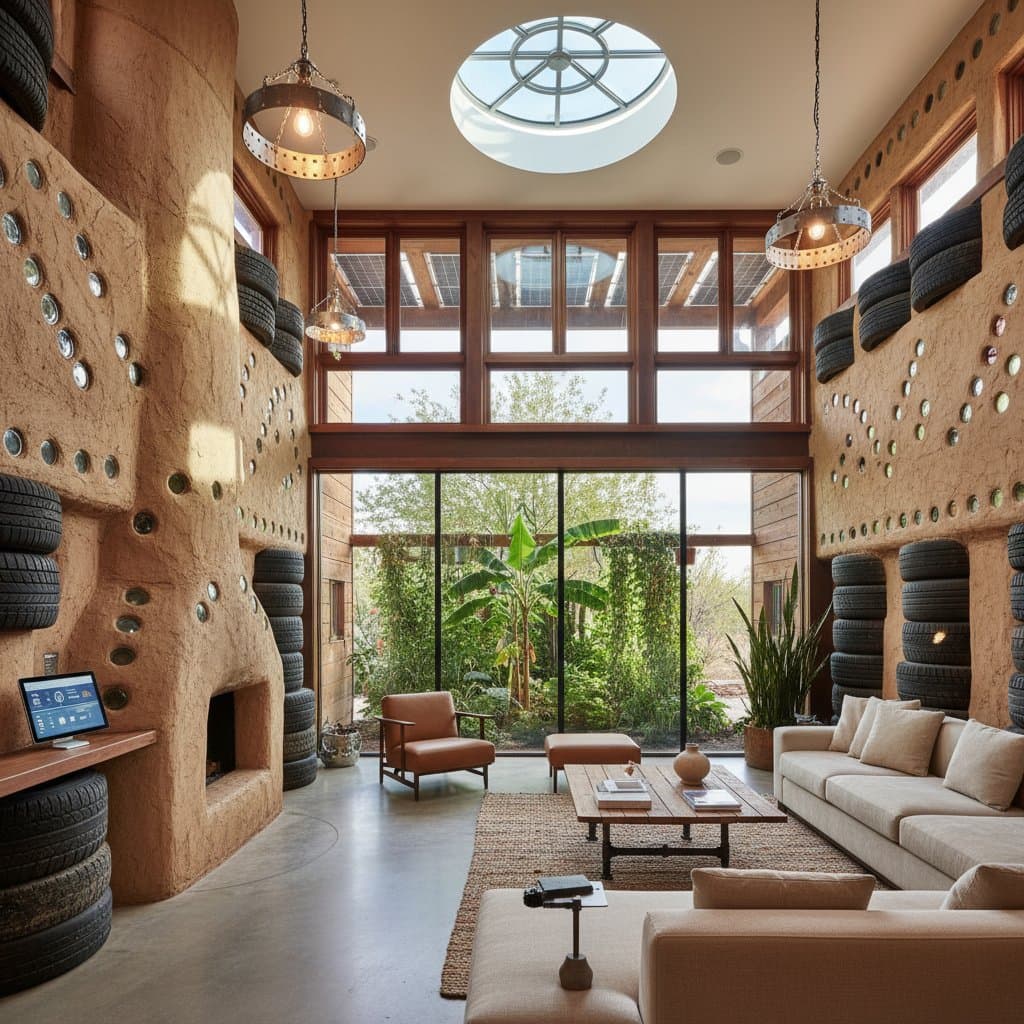
Why Earthship Homes Are Trending in Sustainable Living
Earthship homes have shifted from unusual experiments to practical options for people seeking lower utility costs and greater independence. These structures use recycled materials and natural systems to function without connections to public power, water, or sewer lines. Homeowners who want to reduce ongoing expenses while lowering their environmental impact now consider them seriously.
The Challenge of Traditional Housing
Standard homes rely on municipal utilities that bring rising bills and vulnerability during outages. Limited water supplies and aging infrastructure add further strain for many owners. Earthship designs address these issues through self-contained systems that draw on renewable resources and passive principles.
What Is an Earthship?
An Earthship operates completely off-grid using walls made from packed tires, bottles, and cans finished with adobe or plaster. The thick walls stabilize indoor temperatures, while six integrated systems handle heating, power, water, waste, food production, and material reuse. This setup eliminates monthly utility payments and reduces reliance on external services.
Why Homeowners Are Paying Attention
These homes deliver clear financial and practical benefits that match rising interest in sustainable choices.
- Energy Independence: On-site solar panels and wind turbines supply electricity and keep essential systems running during outages. Installation costs typically range from 10,000 to 25,000 dollars, with savings accumulating over time.
- Reduced Utility Bills: Passive heating and cooling cut energy consumption by up to 80 percent compared with conventional houses, which lowers expenses in regions with high rates or temperature extremes.
- Use of Recycled Materials: Thousands of tires, cans, and bottles become structural elements instead of landfill waste, which reduces material expenses and environmental load.
- Water Self-Sufficiency: Rainwater collection and graywater recycling systems reduce or remove water bills, especially useful in dry or rural locations.
- Healthy Indoor Environment: Natural ventilation and thick walls maintain steady humidity, improve air quality, and buffer noise for a comfortable living space.
The Building Process Step by Step
Construction follows a clear sequence that balances site conditions with system integration.
- Site Selection and Orientation: Pick a south-facing slope with strong solar access and confirm that local zoning permits alternative methods.
- Excavation and Foundation: Partial burial into a hillside uses stable ground temperatures for natural climate control.
- Building the Tire Walls: Tires packed with compacted earth form load-bearing walls that act like dense bricks.
- Interior and Exterior Finishes: Bottles create light-diffusing patterns while plaster or adobe seals the surfaces for durability.
- Roofing and Rainwater Collection: Sloped roofs direct water into filtered cisterns for household use.
- Power and Plumbing Systems: Solar arrays, batteries, and separate graywater lines complete the independent infrastructure.
- Finishing Touches: Efficient appliances, radiant floors, and composting toilets add modern comfort without utility connections.
Cost and Timeline Realities
A 1,200-square-foot Earthship costs between 150,000 and 250,000 dollars depending on whether owners build themselves or hire professionals. DIY projects run 100 to 150 dollars per square foot, while professional builds range from 250 to 400 dollars per square foot. Construction usually takes six to twelve months, though permitting can extend the schedule in areas with strict codes.
Regional Differences and Climate Considerations
Designs adapt to local conditions by increasing insulation in cold climates or improving waterproofing in wet regions. Soil tests guide plaster choices, and early meetings with building officials help navigate code requirements for tire walls and on-site systems.
Safety and Maintenance
Protective gear during tire packing and proper ventilation during plaster work keep the process safe. Annual checks of solar equipment, gutter cleaning, and periodic resealing of finishes maintain performance for decades.
The Environmental Payoff
Each Earthship diverts landfill waste, lowers carbon emissions, and eases demand on public infrastructure. Recycled materials carry far less embodied energy than new concrete or steel, keeping the long-term footprint small.
Challenges and Limitations
Tire ramming demands physical effort, unconventional materials can slow permitting, and resale appraisal may require extra documentation. Humid climates sometimes need added ventilation or backup systems.
Who Should Consider an Earthship
Rural landowners and those comfortable with hands-on upkeep gain the most from full off-grid operation. Urban residents can still adopt individual features such as rainwater harvesting or passive solar elements to improve efficiency in existing homes.
Planning Your Own Project
Visit completed Earthships, consult specialized architects, and review local regulations before finalizing a budget that accounts for both construction and long-term savings. This approach turns sustainable design principles into a resilient, lower-cost way to live.