
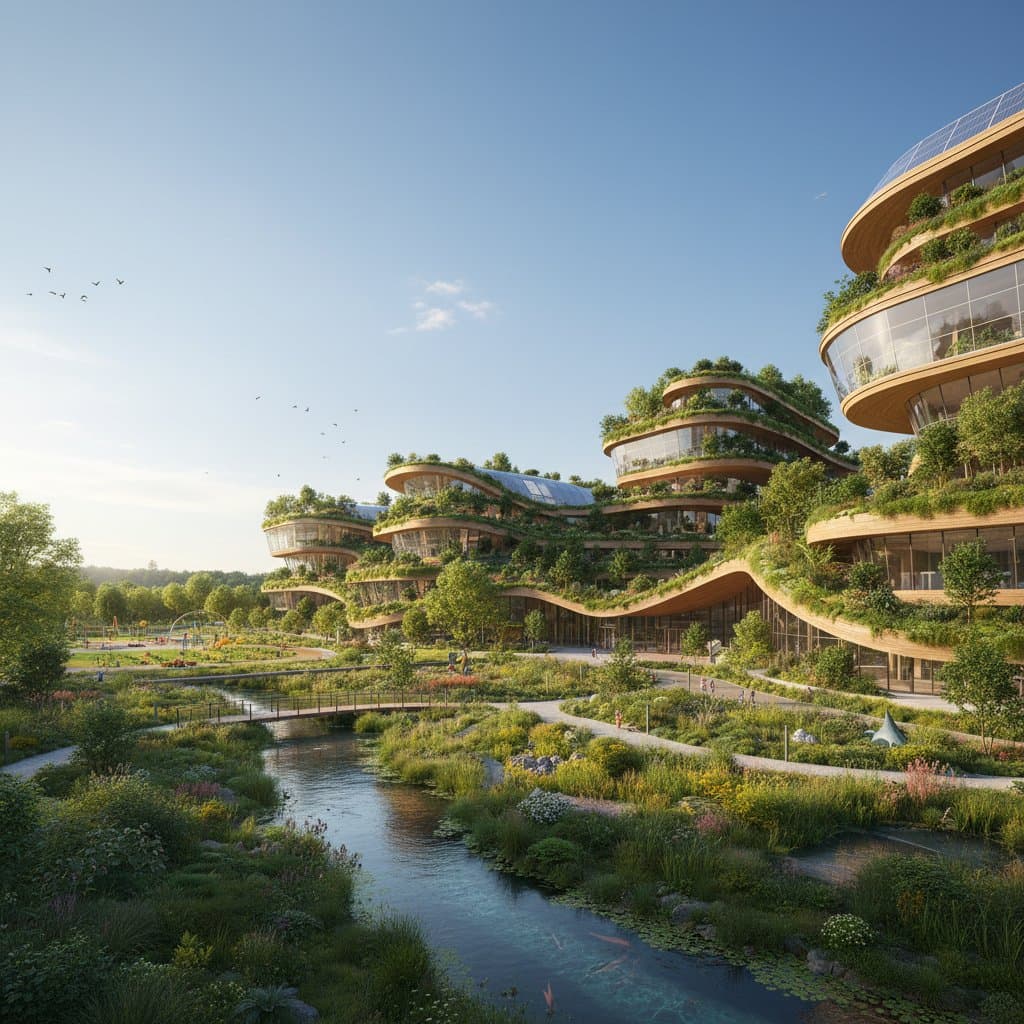
Regenerative Design: Buildings as Ecosystem Healers
Consider a construction site where native vegetation once thrived. Traditional development often erases that landscape, leaving barren soil and displaced wildlife. Regenerative design reverses this pattern. It positions buildings as active participants in environmental recovery, purifying air, replenishing water, and inviting biodiversity back to the area.
Sustainable architecture minimizes harm through energy efficiency and waste reduction. Regenerative approaches advance further by generating net-positive outcomes. These designs integrate structures with their surroundings to enhance soil health, carbon sequestration, and community well-being.
Shifting to a Regenerative Perspective
Regenerative architecture views buildings as integral parts of living ecosystems. Designers consider soil composition, water cycles, local flora, and fauna from the outset. The objective extends beyond efficiency to net improvement, such as enriching depleted land or creating habitats that sustain pollinators and birds.
This mindset distinguishes passive reduction from active restoration. A conventional sustainable project conserves resources. A regenerative one amplifies them, for instance, by channeling harvested rainwater to irrigate native plants that, in turn, bolster local food chains.
Core Principles of Regenerative Implementation
Regenerative design principles appear intricate at first but resolve into straightforward applications.
-
Site-Specific Analysis
Examine topography, sunlight patterns, and existing ecology before breaking ground. Position structures to capture prevailing winds for natural ventilation or align with solar paths to minimize shading on adjacent green spaces. -
Regenerative Material Selection
Opt for substances like cross-laminated timber from managed forests or mycelium-based insulation, which sequester carbon during production and use. These choices lower embodied emissions and promote circular economies through reusability. -
Net-Positive Energy Systems
Install photovoltaic arrays sized to exceed on-site needs, coupled with battery storage for surplus export to community microgrids. Ground-source heat pumps further reduce reliance on fossil fuels while stabilizing indoor climates. -
Integrated Water Management
Deploy constructed wetlands or permeable pavements to treat stormwater on-site. Greywater recycling systems, filtered through bio-membranes, supply non-potable needs like landscape irrigation, easing pressure on urban water infrastructure. -
Biodiversity Enhancement
Incorporate vertical gardens with species that support migratory birds or install fritted glass to prevent avian collisions. These features transform concrete expanses into thriving corridors for urban wildlife.
Tangible Advantages for Occupants and Communities
Occupants in regenerative buildings experience immediate enhancements. Natural ventilation and biophilic elements, such as interior atriums with living walls, elevate air quality and cognitive performance. Stable thermal environments cut heating costs by up to 40 percent in temperate zones.
Broader impacts include mitigated urban flooding through absorbent landscapes and cooler microclimates from vegetative cover, which can lower ambient temperatures by 5 degrees Celsius. Community gardens integrated into designs foster social ties and provide fresh produce, amplifying health and cohesion.
Navigating Practical Challenges
Regenerative projects demand upfront investment, often 15 to 25 percent above standard builds, though lifecycle savings from durability and efficiency recoup expenses within 7 to 10 years. Sourcing specialized materials may require regional suppliers, and regulatory hurdles arise in areas with outdated zoning for living infrastructure.
Incentives like renewable energy tax credits or green building rebates mitigate these barriers. Engaging certified professionals early ensures compliance and optimizes outcomes, turning potential obstacles into opportunities for innovation.
Incorporating Regenerative Elements into Existing Projects
Homeowners and developers can adopt these strategies incrementally without full-scale overhauls.
-
Site Evaluation
Map drainage patterns and solar exposure using simple tools like a sun calculator app. This informs placements for rain barrels or shade structures. -
Native Landscaping
Convert turf to polyculture beds with drought-tolerant perennials. These attract beneficial insects and require 50 percent less irrigation. -
Permeable Infrastructure
Install interlocking pavers over driveways to facilitate infiltration, reducing runoff by 70 percent and replenishing aquifers. -
Rainwater Capture
Fit gutters with first-flush diverters to a 200-gallon cistern, yielding sufficient water for a modest vegetable patch annually. -
Sustainable Sourcing
Select FSC-certified lumber for decks or recycled aggregate for paths, cutting transport-related emissions by prioritizing local quarries. -
Vertical Greening
Affix modular planters to exterior walls with ivy or ferns, which insulate against heat while hosting epiphytic species.
Regenerative Versus Sustainable Design: Key Distinctions
Understanding the evolution from sustainability to regeneration clarifies strategic choices.
| Aspect | Sustainable Design | Regenerative Design |
|---|---|---|
| Energy Strategy | Optimizes efficiency to lower use | Generates surplus for export |
| Water Handling | Conserves through low-flow devices | Purifies and cycles for ecosystem gain |
| Material Choices | Recycles to minimize waste | Sequesters carbon and regenerates soils |
| Ecological Impact | Limits disruption | Actively rebuilds habitats |
| Occupant Benefits | Enhances basic comfort | Promotes deep connection to nature |
This progression builds resilience, turning buildings into catalysts for systemic change.
Achieving Carbon-Negative Outcomes
Carbon-negative buildings absorb more greenhouse gases than they release across their lifespan. This requires holistic integration of low-impact elements.
Biomass materials like bamboo composites lock away CO2 during growth, maintaining sequestration post-construction. Distributed renewables, such as rooftop turbines in windy locales, produce 120 percent of demand, with excess offsetting neighborhood emissions.
Vegetated facades perform dual roles: photosynthetic uptake of CO2 and evaporative cooling that slashes mechanical loads. Optimized envelopes, with high-R-value insulants from agricultural waste, further diminish operational footprints.
Ecosystem Restoration Through Design
Regenerative buildings serve as anchors in larger restoration efforts, bridging isolated natural patches.
-
Soil Revitalization
Amend compacted earth with compost teas and mycorrhizal inoculants to boost microbial activity, enabling carbon storage at rates triple that of untreated land. -
Runoff Remediation
Bioswales with engineered substrates remove 90 percent of urban pollutants, safeguarding downstream wetlands. -
Wildlife Integration
Install bat roosts and insect hotels alongside native hedgerows to enhance natural pest management. -
Thermal Mitigation
Strategic tree canopies and reflective roofs combat heat islands, preserving biodiversity in vulnerable urban fringes.
These interventions interconnect, fostering self-sustaining cycles.
Essential Planning Factors
For new developments or retrofits, address these elements proactively.
- Financial Planning: Allocate for initial premiums on systems like anaerobic digesters, balanced by rebates that cover 30 percent of costs.
- Regulatory Navigation: Consult planners for variances on innovative features, such as aquaponic integrations.
- Expert Collaboration: Assemble teams versed in biomimicry to simulate natural processes in built forms.
- Ongoing Stewardship: Schedule quarterly inspections for vegetative systems to sustain performance.
- Stakeholder Engagement: Host workshops to align designs with community priorities, enhancing adoption.
Proven Applications Worldwide
Innovative projects demonstrate scalability. A European office complex powers adjacent schools via shared solar canopies. In Asia, residential towers with integrated aquaculture treat wastewater while yielding fish harvests. North American suburbs feature permeable streetscapes that recharge local aquifers.
These cases illustrate adaptability, from modest homes to expansive campuses, proving regenerative viability across contexts.
Strategies for Effective Implementation
- Incremental Adoption: Pilot a single feature, like a solar thermal array, then scale based on performance metrics.
- Performance Monitoring: Deploy sensors for real-time data on energy yield and water quality to inform adjustments.
- Local Expertise: Partner with regional botanists to select climate-resilient species.
- Adaptive Frameworks: Design modular components, such as expandable green walls, for future-proofing.
- Collaborative Networks: Form alliances for bulk material procurement, amplifying cost efficiencies.
Advancing Restoration Through Everyday Choices
Regenerative design invites participation at every level, yielding environments that nurture both people and planet. By embedding these practices, individuals contribute to resilient landscapes that endure and evolve.