
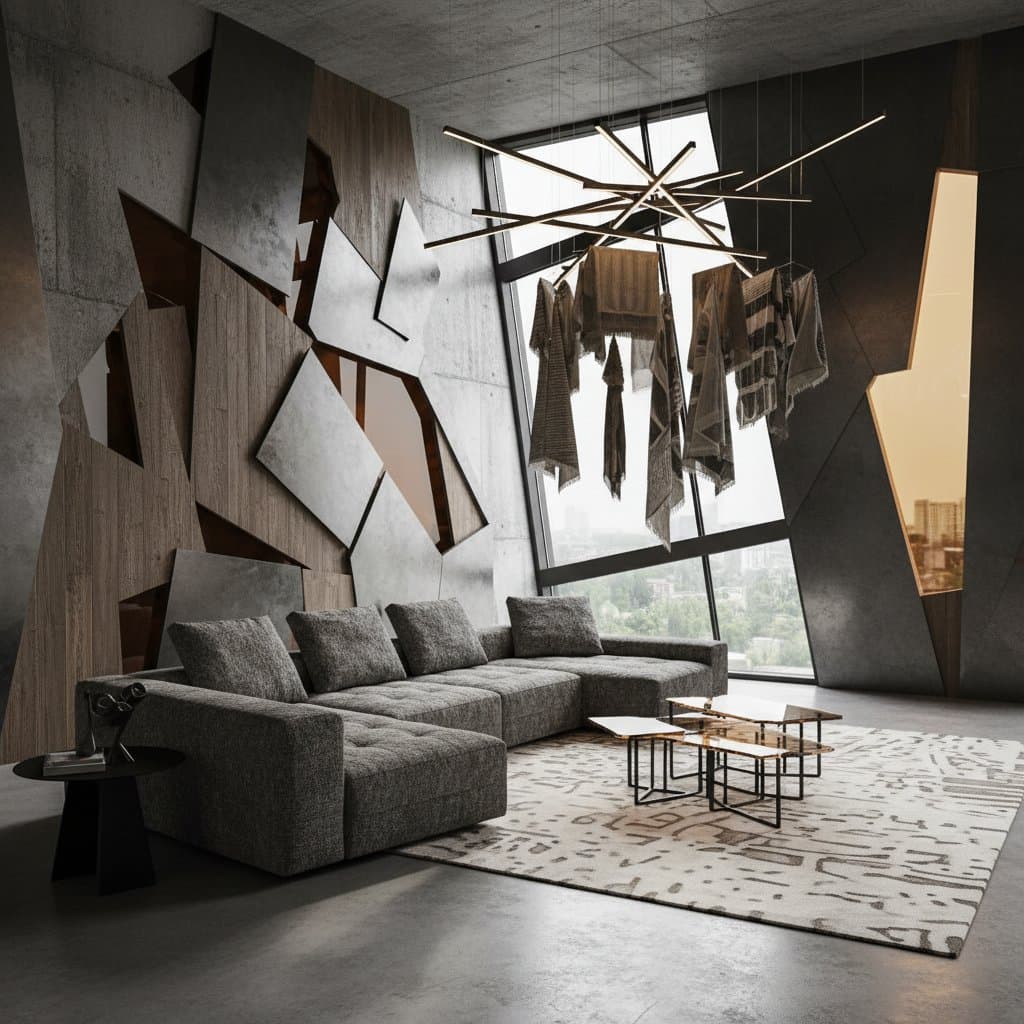
The Rise of Fragmented Deconstructivist Interiors in 2026
A living room with angled walls, disjointed furniture, and sharp lighting patterns can still feel deliberate. Fragmented deconstructivist design creates this effect by rejecting perfect symmetry in favor of controlled irregularity. The style turns structural elements into visual features and builds spaces that feel dynamic.
Moving Beyond Traditional Order
Residential design long favored balanced layouts and uniform palettes. Fragmented deconstructivist interiors depart from that approach. They expose beams, create angled surfaces, and layer contrasting materials to generate tension and movement. The result encourages engagement rather than passive comfort.
Homeowners choose this direction when they seek rooms that reflect personal perspective. The focus remains on purposeful contrast instead of random disruption.
Core Elements of the Style
Designers apply deconstructivist principles through specific techniques.
- Irregular geometry in walls or cabinetry that shifts direction with clear intent.
- Exposed structural components such as beams and joints treated as finishes.
- Textural contrasts from concrete, steel, wood, and glass placed in direct contact.
- Lighting positioned to produce angular shadows across breaks and edges.
- Color applied in distinct geometric blocks rather than continuous fields.
These choices produce rhythm when the arrangement stays measured.
Practical Steps for Home Application
Implementation begins with targeted changes rather than full reconstruction.
- Expose select structural elements by removing nonessential drywall sections. Budget between 2000 and 7000 dollars for a typical wall, based on size and existing condition.
- Pair dissimilar materials on focal surfaces. A fractured slate panel next to brushed steel introduces immediate contrast at roughly 20 to 40 dollars per square foot.
- Install linear LED tracks or clustered pendants that direct light at varied angles. Fixture costs range from 300 to 1200 dollars including controls.
- Divide wall areas into geometric color zones using tape or layered plaster. Materials for a standard room fall between 300 and 800 dollars.
- Select sculptural seating and abstract wall pieces that reinforce angular lines.
Maintaining Function and Safety
Successful projects limit material variety to three or four textures. Lighting angles must support navigation, and all sharp edges require rounding or protective trim. Movement paths stay clear of suspended elements.
Professional Support and Budget Factors
Contractors experienced with irregular work charge 10 to 20 percent above standard remodeling rates. Urban markets list hourly fees from 90 to 150 dollars, while smaller regions range from 50 to 90 dollars. Early consultation with local building departments clarifies permit needs for structural exposure.
Market Response and Long Term Value
In contemporary neighborhoods the approach can return 60 to 75 percent of invested cost through enhanced buyer interest. Traditional markets respond better to reversible surface treatments such as finishes and lighting. The design rewards ongoing adjustment as light conditions change throughout the day.
Execution Practices That Sustain Quality
Test layouts with tape outlines before cutting. Introduce reflective surfaces to expand perceived space. Add acoustic elements to offset hard finishes. Review illumination after dark to confirm shadow patterns remain balanced. Regular inspection of joints preserves the intended crispness.